

Aluminum coils are widely used in various industries due to their unique combination of properties. As a leading aluminum coil supplier, I am often asked about the mechanical properties of aluminum coils. In this blog post, I will delve into the key mechanical properties of aluminum coils, explaining how they contribute to the performance and suitability of these products in different applications.
Tensile Strength
Tensile strength is one of the most important mechanical properties of aluminum coils. It refers to the maximum amount of tensile stress that a material can withstand before breaking. Aluminum coils typically have good tensile strength, which makes them suitable for applications where the material needs to resist stretching or pulling forces.
The tensile strength of aluminum coils can vary depending on several factors, including the alloy composition, temper, and thickness. For example, high-strength aluminum alloys such as 6061 and 7075 have higher tensile strengths compared to pure aluminum or other lower-strength alloys. The temper of the aluminum coil also plays a significant role in determining its tensile strength. Heat-treated tempers, such as T6 and T651, generally have higher tensile strengths than non-heat-treated tempers.
In practical applications, the tensile strength of aluminum coils is crucial for ensuring the structural integrity of the finished products. For instance, in the automotive industry, aluminum coils are used to manufacture body panels, engine components, and other parts that need to withstand high levels of stress during operation. The high tensile strength of aluminum coils helps to prevent these parts from deforming or breaking under load, ensuring the safety and reliability of the vehicles.
Yield Strength
Yield strength is another important mechanical property of aluminum coils. It is defined as the stress at which a material begins to deform plastically, meaning that it will not return to its original shape after the stress is removed. Yield strength is an important consideration in applications where the material needs to maintain its shape and dimensions under load.
Similar to tensile strength, the yield strength of aluminum coils can vary depending on the alloy composition, temper, and thickness. High-strength aluminum alloys and heat-treated tempers generally have higher yield strengths compared to lower-strength alloys and non-heat-treated tempers.
In many applications, the yield strength of aluminum coils is more critical than the tensile strength. For example, in the construction industry, aluminum coils are used to manufacture structural components such as beams, columns, and frames. These components need to be able to support the weight of the building and other loads without deforming permanently. The high yield strength of aluminum coils ensures that these components can maintain their shape and integrity under load, providing a stable and safe structure.
Elongation
Elongation is a measure of the ability of a material to stretch or deform before breaking. It is expressed as a percentage of the original length of the material. Aluminum coils typically have good elongation properties, which means that they can be easily formed into various shapes without cracking or breaking.
The elongation of aluminum coils can vary depending on the alloy composition, temper, and thickness. Generally, pure aluminum and some low-strength alloys have higher elongation values compared to high-strength alloys. The temper of the aluminum coil also affects its elongation properties. Soft tempers, such as O and H12, have higher elongation values than hard tempers, such as H32 and H34.
The good elongation properties of aluminum coils make them suitable for a wide range of forming processes, including bending, rolling, and stamping. In the manufacturing of aluminum products, such as cans, foil, and automotive parts, the ability to form the material into complex shapes is essential. The high elongation of aluminum coils allows manufacturers to produce these products with precision and efficiency, reducing production costs and improving product quality.
Hardness
Hardness is a measure of a material's resistance to indentation, scratching, or wear. It is an important property in applications where the material needs to withstand abrasion, friction, or other forms of mechanical damage. Aluminum coils can have different levels of hardness depending on the alloy composition, temper, and heat treatment.
Hardness is typically measured using a hardness testing method, such as the Brinell, Rockwell, or Vickers hardness tests. The hardness of aluminum coils can range from relatively soft (e.g., pure aluminum) to very hard (e.g., some high-strength alloys). Heat treatment processes, such as annealing and quenching, can be used to increase the hardness of aluminum coils.
In applications where the aluminum coils are exposed to wear and tear, such as in the manufacturing of machinery parts or industrial equipment, high hardness is desirable. The hard surface of the aluminum coils helps to resist abrasion and scratching, extending the service life of the products. On the other hand, in applications where the material needs to be easily machined or formed, a lower hardness may be preferred.
Ductility
Ductility is closely related to elongation and refers to the ability of a material to be drawn into a wire or stretched into a thin sheet without breaking. Aluminum coils are known for their good ductility, which makes them suitable for applications where the material needs to be formed into thin or complex shapes.
The ductility of aluminum coils can be affected by several factors, including the alloy composition, temper, and grain structure. Pure aluminum and some low-strength alloys generally have higher ductility compared to high-strength alloys. The temper of the aluminum coil also plays a role in determining its ductility. Soft tempers, such as O and H12, have higher ductility than hard tempers, such as H32 and H34.
In the manufacturing of aluminum wire, foil, and other thin products, the high ductility of aluminum coils is essential. The ability to draw the material into a thin wire or sheet without breaking allows manufacturers to produce these products with high precision and efficiency. Additionally, the good ductility of aluminum coils makes them suitable for applications where the material needs to be bent or formed into complex shapes, such as in the automotive and aerospace industries.
Fatigue Resistance
Fatigue resistance is the ability of a material to withstand repeated loading and unloading cycles without failing. It is an important property in applications where the material is subjected to cyclic stresses, such as in the automotive, aerospace, and machinery industries.
Aluminum coils generally have good fatigue resistance, especially when compared to other metals such as steel. The fatigue resistance of aluminum coils can be improved by using high-strength alloys, proper heat treatment, and surface treatments. For example, shot peening is a surface treatment process that can be used to introduce compressive stresses on the surface of the aluminum coil, which helps to improve its fatigue resistance.
In applications where the aluminum coils are exposed to cyclic stresses, such as in the manufacturing of automotive engine components or aircraft wings, high fatigue resistance is crucial. The ability of the material to withstand repeated loading and unloading cycles without failing ensures the safety and reliability of the products.
Impact Resistance
Impact resistance is a measure of a material's ability to absorb energy and resist fracture when subjected to a sudden impact. It is an important property in applications where the material is likely to be exposed to impact forces, such as in the automotive, construction, and consumer goods industries.
Aluminum coils generally have good impact resistance, especially when compared to other lightweight materials such as plastics. The impact resistance of aluminum coils can be improved by using high-strength alloys, proper heat treatment, and design considerations. For example, adding ribs or other structural features to the aluminum coil can help to distribute the impact energy and prevent fracture.
In applications where the aluminum coils are exposed to impact forces, such as in the manufacturing of automotive bumpers or construction panels, high impact resistance is desirable. The ability of the material to absorb energy and resist fracture helps to protect the products and their contents from damage.
Conclusion
In conclusion, the mechanical properties of aluminum coils, including tensile strength, yield strength, elongation, hardness, ductility, fatigue resistance, and impact resistance, play a crucial role in determining their performance and suitability in different applications. As an aluminum coil supplier, I understand the importance of these properties and strive to provide high-quality aluminum coils that meet the specific requirements of my customers.
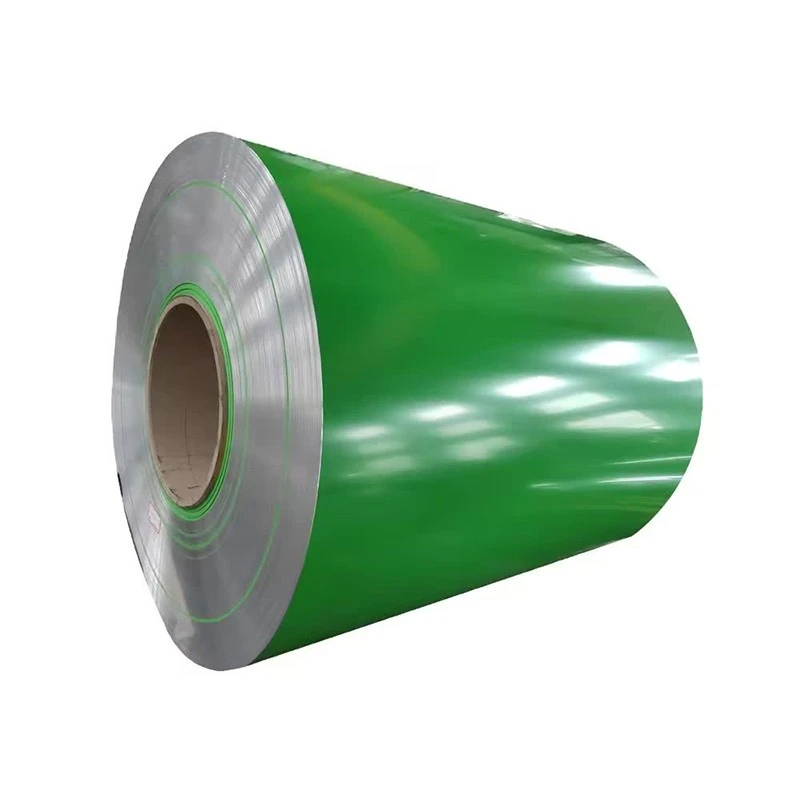
If you are interested in learning more about our Aluminium Coated Roll, Painted Aluminum Coil, or Prefinished Aluminum Coils, please feel free to contact me. I would be happy to discuss your needs and provide you with a customized solution.
References
- ASM Handbook, Volume 2: Properties and Selection: Nonferrous Alloys and Special-Purpose Materials. ASM International.
- Aluminum Association. Aluminum Design Manual.
- Callister, W. D., & Rethwisch, D. G. (2011). Materials Science and Engineering: An Introduction. Wiley.