

Hey there! As a supplier of 3003 aluminum coil, I often get asked about the yield strength of this popular material. So, I thought I'd take a few minutes to break it down for you and explain why it matters.
First off, let's talk about what yield strength actually means. In simple terms, yield strength is the amount of stress a material can handle before it starts to deform permanently. Think of it like stretching a rubber band. At first, the rubber band will stretch and then go back to its original shape when you let go. But if you stretch it too far, it'll start to lose its elasticity and won't go back to normal. That's kind of what happens to a material when it reaches its yield strength.
Now, let's get into the specifics of 3003 aluminum coil. 3003 is an alloy that's made up of aluminum, manganese, and a small amount of copper. It's a very versatile material that's used in a wide range of applications, from automotive parts to roofing and siding. One of the reasons it's so popular is because it has a good combination of strength, formability, and corrosion resistance.
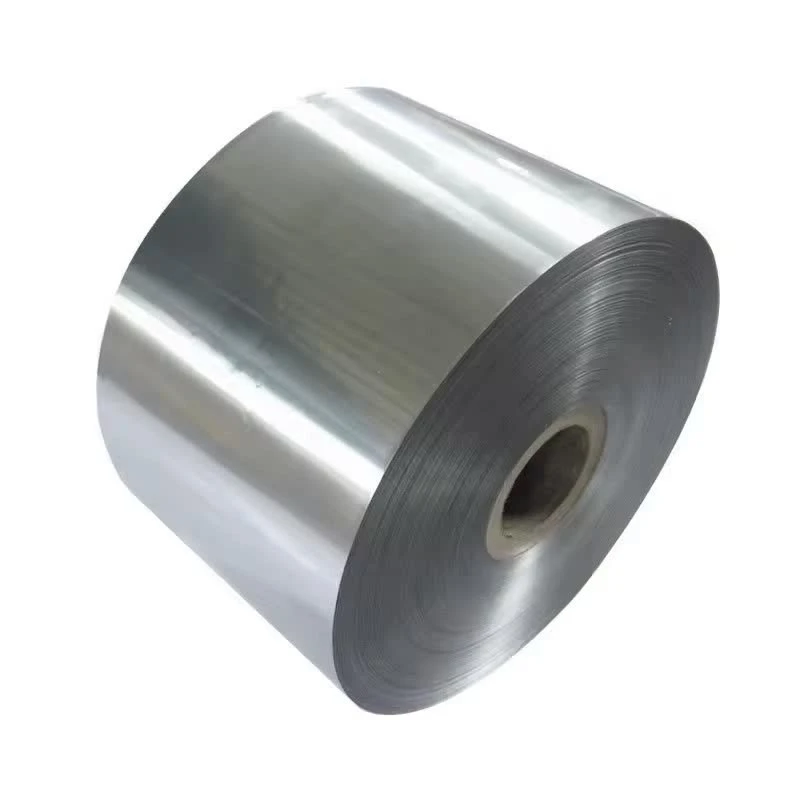

So, what's the yield strength of 3003 aluminum coil? Well, it depends on a few factors, such as the temper of the material and the thickness of the coil. Generally speaking, the yield strength of 3003 aluminum coil ranges from about 35 MPa (megapascals) to 165 MPa. That might not mean much to you if you're not familiar with these units of measurement, so let me put it in perspective.
A MPa is a unit of pressure that's equal to one million pascals. To give you an idea of how much pressure that is, the average atmospheric pressure at sea level is about 101.3 kPa (kilopascals), which is equivalent to 0.1013 MPa. So, even the lowest yield strength of 3003 aluminum coil is significantly higher than the pressure we experience in our daily lives.
Let's take a closer look at how the temper of the material affects the yield strength. 3003 aluminum coil is available in several different tempers, including O (annealed), H12 (quarter hard), H14 (half hard), H16 (three - quarter hard), and H18 (full hard). The annealed temper (O) is the softest and most ductile, which means it has the lowest yield strength. On the other hand, the full - hard temper (H18) is the strongest and least ductile, with the highest yield strength.
For example, a 3003 aluminum coil in the O temper might have a yield strength of around 35 - 55 MPa. This makes it very easy to form and shape, but it's not as strong as the harder tempers. If you need a coil that can withstand more stress, you might choose a H14 temper, which could have a yield strength of around 110 - 130 MPa.
The thickness of the coil also plays a role in determining the yield strength. Thicker coils generally have higher yield strengths than thinner ones. This is because there's more material to resist the applied stress. However, it's important to note that the relationship between thickness and yield strength isn't always linear. Other factors, such as the manufacturing process and the quality of the raw materials, can also have an impact.
Now, you might be wondering why the yield strength of 3003 aluminum coil is so important. Well, it's crucial for ensuring the safety and performance of the products made from this material. For instance, if you're using 3003 aluminum coil to make automotive parts, you need to make sure that the parts can withstand the stresses and strains they'll be subjected to during normal use. If the yield strength is too low, the parts could deform or break, which could lead to serious safety issues.
In the construction industry, the yield strength of 3003 aluminum coil is also important. When used for roofing or siding, the coil needs to be able to withstand wind, snow, and other environmental loads. A coil with a higher yield strength is less likely to buckle or warp under these conditions, which means it'll last longer and provide better protection for the building.
As a supplier of 3003 aluminum coil, I can offer you a wide range of options to meet your specific needs. Whether you need a soft, formable coil for intricate designs or a stronger, more rigid coil for heavy - duty applications, we've got you covered. And if you're looking for something a little more specialized, we also offer Pre Painted Aluminium, Color Aluminium Coil, and Coated Aluminum Roll. These products not only have the same great properties as regular 3003 aluminum coil but also come with the added benefits of a decorative finish and enhanced corrosion resistance.
If you're in the market for 3003 aluminum coil or any of our other products, I'd love to hear from you. We're committed to providing high - quality materials at competitive prices, and our team of experts is always on hand to help you choose the right product for your project. So, don't hesitate to reach out and start a conversation about your procurement needs. We're here to make the process as easy and hassle - free as possible.
In conclusion, the yield strength of 3003 aluminum coil is an important characteristic that can vary depending on the temper and thickness of the material. Understanding this property is essential for ensuring the safety and performance of the products made from 3003 aluminum coil. Whether you're in the automotive, construction, or any other industry, we can supply you with the right 3003 aluminum coil to meet your requirements. So, if you're interested in learning more or making a purchase, just get in touch, and we'll take it from there.
References
- ASM Handbook Committee. (2000). ASM Handbook Volume 2: Properties and Selection: Nonferrous Alloys and Special - Purpose Materials. ASM International.
- Aluminum Association. (2023). Aluminum Standards and Data. Aluminum Association.