

The manufacturing process of ACP (Aluminum Composite Panel) for ceiling is a complex yet fascinating journey that combines precision engineering with advanced materials science. As a leading supplier of ACP for ceiling, I am excited to share with you the detailed steps involved in creating these high - performance building materials.
Step 1: Raw Material Selection
The foundation of any quality ACP for ceiling lies in the careful selection of raw materials. The two main components of ACP are the aluminum sheets and the core material.
For the aluminum sheets, we typically use high - grade aluminum alloys that offer excellent strength, corrosion resistance, and formability. The thickness of the aluminum sheets can vary depending on the specific application and customer requirements, but commonly, we use sheets with a thickness ranging from 0.2mm to 0.5mm. These aluminum sheets are sourced from reputable suppliers who adhere to strict quality control standards.
The core material is another crucial element. It provides the panel with insulation properties, sound - reduction capabilities, and structural rigidity. Commonly used core materials include polyethylene (PE), which is lightweight, cost - effective, and has good impact resistance. For more fire - resistant applications, we may use mineral - filled cores.
Step 2: Surface Treatment of Aluminum Sheets
Once the aluminum sheets are selected, they undergo a series of surface treatment processes to enhance their appearance and durability.
The first step is degreasing. The aluminum sheets are cleaned to remove any oil, dirt, or contaminants from their surfaces. This is usually done using a chemical cleaning solution. After degreasing, the sheets are rinsed thoroughly to ensure that no residue remains.
Next, the aluminum sheets are chemically pre - treated. This process involves applying a conversion coating, such as chromate or non - chromate treatment. The conversion coating acts as a primer, improving the adhesion of the subsequent paint layers and providing additional corrosion protection.
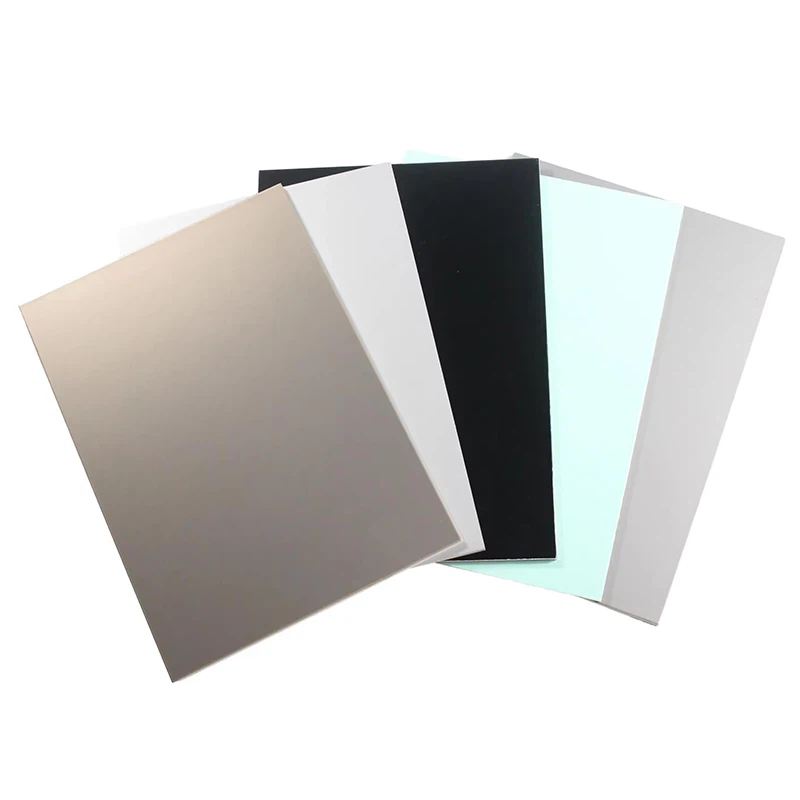

Step 3: Coating Application
The coating on ACP for ceiling not only enhances its aesthetic appeal but also provides protection against environmental factors such as UV rays, weathering, and abrasion.
There are different types of coatings available. One of the most popular is the PVDF (Polyvinylidene Fluoride) coating. PVDF coatings offer exceptional weather resistance, color retention, and gloss retention over a long period. To learn more about PVDF Coating Aluminum Composite Panel, you can visit our website.
The coating application process typically involves multiple steps. First, a base coat is applied to the pre - treated aluminum sheets. The base coat helps to further improve adhesion and provides additional protection. After the base coat is applied and dried, the topcoat, which is usually the PVDF or other high - performance coating, is sprayed on. The coated sheets are then baked in an oven at a specific temperature to ensure proper curing of the coating.
Step 4: Core Extrusion
While the aluminum sheets are being prepared, the core material is processed through extrusion. In the case of a PE core, the polyethylene resin is melted and fed into an extruder. The extruder uses a die to shape the molten polyethylene into a continuous sheet of the desired thickness and width.
During the extrusion process, additives can be incorporated into the PE resin to enhance its properties. For example, flame retardants can be added to improve the fire resistance of the core, or UV stabilizers can be used to protect the core from the harmful effects of sunlight.
Step 5: Lamination
Lamination is the process of bonding the two coated aluminum sheets to the core material. This is a critical step in the manufacturing of ACP for ceiling, as it determines the overall strength and durability of the panel.
The lamination process typically uses a high - pressure hydraulic press or a continuous lamination machine. First, a layer of adhesive is applied to both sides of the core material. The coated aluminum sheets are then placed on top of the adhesive - coated core, and the assembly is fed into the press or machine.
Under high pressure and temperature, the adhesive cures, forming a strong bond between the aluminum sheets and the core. The exact pressure, temperature, and duration of the lamination process depend on the type of adhesive and materials used.
Step 6: Cutting and Edge Treatment
After lamination, the large ACP sheets are cut into the desired sizes for ceiling applications. The cutting process is carried out using precision cutting equipment to ensure accurate dimensions and smooth edges.
Once the panels are cut, the edges are treated to prevent delamination and improve the overall appearance. Edge treatment may involve applying a sealant or a protective coating to the exposed edges of the ACP.
Step 7: Quality Control
Quality control is an integral part of the manufacturing process of ACP for ceiling. At every stage, from raw material selection to the final product, strict quality control measures are implemented.
We conduct a series of tests on the ACP panels to ensure they meet the required standards. These tests include mechanical property tests, such as bending strength and impact resistance tests, as well as chemical and environmental tests, such as corrosion resistance and weatherability tests.
Only panels that pass all the quality control tests are approved for shipment. This ensures that our customers receive high - quality ACP for ceiling that meets their expectations and performs well in their applications.
Step 8: Packaging and Shipping
Once the ACP panels have passed the quality control tests, they are carefully packaged to prevent damage during transportation. The panels are usually wrapped in protective film and placed in wooden crates or pallets.
We have a well - established shipping and logistics network to ensure that the panels are delivered to our customers in a timely and efficient manner. Whether our customers are located locally or internationally, we can provide reliable shipping services.
At our company, we are committed to providing high - quality ACP for ceiling that meets the diverse needs of our customers. Our products, such as Marble Aluminum Composite Panel and Aluminium ACP Board, are widely used in commercial and residential ceiling projects around the world.
If you are interested in our ACP for ceiling products and would like to learn more about our manufacturing process, or if you have any specific requirements for your next project, we encourage you to contact us for a detailed discussion. Our experienced sales team is ready to assist you with product selection, technical support, and procurement negotiations. We look forward to partnering with you to bring your ceiling design ideas to life.
References
- Aluminum Association. "Properties and Performance of Aluminum Alloys".
- ASTM International. Standards related to Aluminum Composite Panels.