

When it comes to pre - coated aluminium, tensile strength is a critical property that can significantly impact its performance in various applications. As a pre - coated aluminium supplier, I have witnessed firsthand the importance of understanding and meeting the appropriate tensile strength requirements.
Understanding Tensile Strength
Tensile strength refers to the maximum amount of tensile (pulling) stress that a material can withstand before it breaks or fails. In the case of pre - coated aluminium, it is measured in units of force per unit area, typically megapascals (MPa). This property is essential because pre - coated aluminium is used in a wide range of applications where it may be subjected to pulling or stretching forces.
The tensile strength of pre - coated aluminium is influenced by several factors. The base aluminium alloy plays a fundamental role. Different alloys have different inherent strengths. For example, alloys like 3003 and 5052 are commonly used in pre - coated aluminium products. Alloy 3003 is known for its good formability and moderate strength, while alloy 5052 offers higher strength and better corrosion resistance.
The coating process also has an impact on tensile strength. The pre - coating is designed to provide additional protection, such as against corrosion, UV radiation, and abrasion. However, if the coating is too thick or not properly adhered to the aluminium substrate, it can potentially affect the overall mechanical properties of the material, including its tensile strength.
Tensile Strength Requirements in Different Applications
Construction Industry
In the construction industry, pre - coated aluminium is widely used for roofing, wall cladding, and architectural applications. For roofing applications, the pre - coated aluminium sheets need to have sufficient tensile strength to withstand the forces exerted by wind, rain, and snow. A typical minimum tensile strength requirement for roofing applications might be around 180 - 200 MPa. This ensures that the sheets can resist the upward pull of strong winds without tearing or detaching from the supporting structure.
Wall cladding also requires a certain level of tensile strength. The panels need to be able to maintain their integrity under normal weather conditions and occasional impacts. For high - rise buildings, where the walls are exposed to more extreme weather and wind forces, the tensile strength requirements might be even higher, perhaps in the range of 220 - 250 MPa.

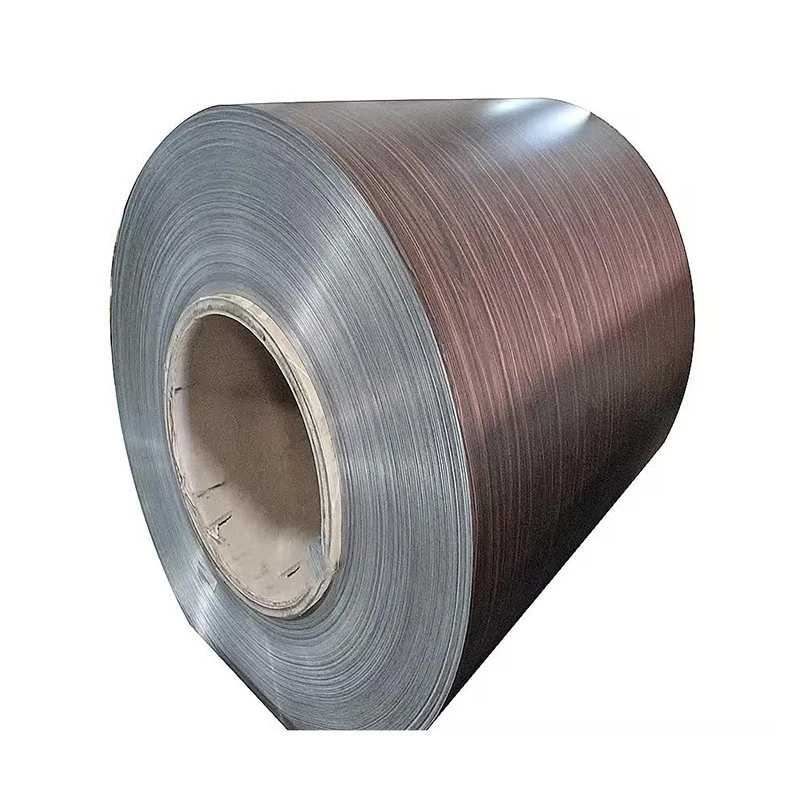
When considering Pre Painted Aluminum Sheet for construction purposes, it is crucial to choose a product that meets or exceeds these industry - specific tensile strength requirements. This not only ensures the safety and durability of the building but also reduces the need for frequent repairs and replacements.
Automotive Industry
The automotive industry also makes extensive use of pre - coated aluminium. It is used in body panels, interior components, and structural parts. In body panels, the pre - coated aluminium needs to have good formability as well as adequate tensile strength. The panels are often subjected to minor impacts during normal use, such as from stones on the road or minor collisions. A tensile strength of around 200 - 280 MPa is typically required for automotive body panels to ensure that they can absorb these impacts without cracking or denting excessively.
Structural parts in vehicles, such as frames and reinforcements, have even higher tensile strength requirements. These parts need to support the weight of the vehicle and withstand the forces generated during acceleration, braking, and cornering. Pre - coated aluminium used in these applications may need to have a tensile strength of 300 MPa or more.
Meeting Tensile Strength Requirements
As a pre - coated aluminium supplier, we take several steps to ensure that our products meet the required tensile strength standards. Firstly, we carefully select the base aluminium alloy. We work closely with our alloy suppliers to source high - quality alloys with the appropriate chemical composition and mechanical properties.
During the manufacturing process, we use advanced rolling and annealing techniques to control the grain structure of the aluminium. A fine - grained structure generally leads to higher strength. We also pay close attention to the coating process. Our coatings are applied using state - of - the - art equipment to ensure a uniform thickness and good adhesion to the aluminium substrate, without compromising the tensile strength of the base material.
We conduct regular quality control tests on our products. These tests include tensile strength testing using specialized equipment. Samples are taken from each production batch and tested to ensure that they meet the specified tensile strength requirements. Any batch that does not meet the standards is either re - processed or discarded to maintain the high quality of our products.
Our Product Range and Tensile Strength
We offer a wide range of pre - coated aluminium products, including Premium Coils and Aluminium Coating Coil. Our premium coils are designed for high - end applications where superior performance is required. They are made from high - strength aluminium alloys and coated with a durable finish. These coils typically have a tensile strength in the range of 220 - 280 MPa, making them suitable for demanding applications in the construction and automotive industries.
Our aluminium coating coils, on the other hand, are available in different alloy grades to meet a variety of customer needs. For general - purpose applications, we offer coils with a tensile strength of around 180 - 200 MPa. These coils are cost - effective and suitable for applications where the tensile strength requirements are not extremely high.
Importance of Tensile Strength in Product Selection
When customers are selecting pre - coated aluminium products, they should carefully consider the tensile strength requirements of their specific applications. Choosing a product with insufficient tensile strength can lead to premature failure, which can be costly in terms of both repairs and replacements. On the other hand, choosing a product with significantly higher tensile strength than necessary may result in unnecessary costs.
We, as a supplier, are committed to providing our customers with accurate information about the tensile strength of our products. Our sales team is well - trained to understand the requirements of different applications and can help customers choose the most suitable pre - coated aluminium product based on their specific needs.
Contact Us for Your Pre - Coated Aluminium Needs
If you are in the market for pre - coated aluminium products, we invite you to contact us to discuss your requirements. Whether you need pre - coated aluminium for construction, automotive, or other applications, we have the expertise and the product range to meet your needs. Our team of experts will work with you to ensure that you get the right product with the appropriate tensile strength at a competitive price.
References
- ASM Handbook Volume 2: Properties and Selection: Nonferrous Alloys and Special - Purpose Materials. ASM International.
- Aluminum Association. Aluminum Standards and Data.
- ISO 6892 - 1:2019 Metallic materials — Tensile testing — Part 1: Method of test at room temperature.