

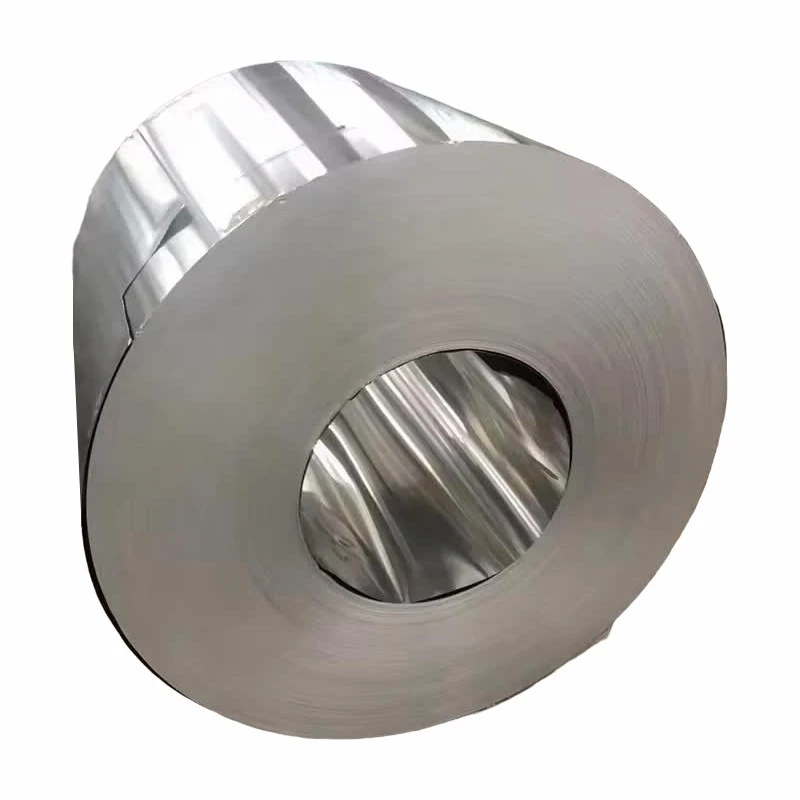
As a seasoned supplier of Aluminum Coil Rolls, I've witnessed firsthand the profound impact that temper has on the performance of these versatile products. Temper refers to the hardness and ductility of aluminum, which is achieved through a combination of heat treatment and cold working processes. In this blog post, I'll delve into the intricacies of how temper affects the performance of Aluminum Coil Rolls, exploring its influence on various properties and applications.

Understanding Aluminum Temper Designations
Before we dive into the effects of temper on performance, it's essential to understand the standardized temper designations used in the aluminum industry. These designations provide a clear indication of the temper and the processing history of the aluminum. The most common temper designations for Aluminum Coil Rolls are:
- O Temper (Annealed): This is the softest and most ductile temper of aluminum. It is achieved by annealing the aluminum at a specific temperature to relieve internal stresses and restore its original softness. O-temper Aluminum Coil Rolls are highly formable and are often used in applications that require extensive bending, shaping, or deep drawing.
- H Temper (Strain Hardened): H-temper aluminum is cold worked to increase its strength and hardness. The H designation is followed by two or three digits that indicate the degree of cold work and any additional heat treatment. For example, H12 indicates a quarter-hard temper, while H24 indicates a half-hard temper with partial annealing. H-temper Aluminum Coil Rolls are commonly used in applications that require high strength and good corrosion resistance, such as roofing, siding, and automotive parts.
- T Temper (Solution Heat Treated and Precipitation Hardened): T-temper aluminum is solution heat treated to dissolve alloying elements and then quenched to retain them in a supersaturated solid solution. The aluminum is then aged at a specific temperature to precipitate the alloying elements, which increases its strength and hardness. The T designation is followed by a digit that indicates the specific heat treatment process. For example, T6 indicates a solution heat treatment followed by artificial aging. T-temper Aluminum Coil Rolls are used in applications that require high strength, good fatigue resistance, and excellent machinability, such as aerospace components and structural parts.
Impact of Temper on Mechanical Properties
The temper of Aluminum Coil Rolls has a significant impact on their mechanical properties, including strength, hardness, ductility, and toughness. Here's a closer look at how each of these properties is affected by temper:
- Strength: The strength of Aluminum Coil Rolls increases with increasing temper. H-temper and T-temper aluminum are stronger than O-temper aluminum due to the cold work and precipitation hardening processes. The higher the temper, the greater the strength of the aluminum. However, as the strength increases, the ductility and toughness of the aluminum decrease.
- Hardness: Hardness is a measure of the resistance of a material to indentation or scratching. The hardness of Aluminum Coil Rolls also increases with increasing temper. H-temper and T-temper aluminum are harder than O-temper aluminum due to the cold work and precipitation hardening processes. The higher the temper, the harder the aluminum. Hardness is an important property in applications that require wear resistance, such as automotive parts and machinery components.
- Ductility: Ductility is the ability of a material to deform plastically without fracturing. O-temper Aluminum Coil Rolls are the most ductile, as they have been annealed to relieve internal stresses and restore their original softness. H-temper and T-temper aluminum are less ductile than O-temper aluminum due to the cold work and precipitation hardening processes. The higher the temper, the lower the ductility of the aluminum. Ductility is an important property in applications that require extensive bending, shaping, or deep drawing, such as automotive body panels and architectural components.
- Toughness: Toughness is the ability of a material to absorb energy and deform plastically before fracturing. O-temper Aluminum Coil Rolls are the toughest, as they have high ductility and can absorb a large amount of energy before fracturing. H-temper and T-temper aluminum are less tough than O-temper aluminum due to their lower ductility. The higher the temper, the lower the toughness of the aluminum. Toughness is an important property in applications that require impact resistance, such as automotive bumpers and structural parts.
Influence of Temper on Corrosion Resistance
The temper of Aluminum Coil Rolls can also affect their corrosion resistance. Aluminum naturally forms a thin oxide layer on its surface that protects it from corrosion. However, the thickness and integrity of this oxide layer can be influenced by the temper of the aluminum.
- O Temper: O-temper Aluminum Coil Rolls have a relatively thick and uniform oxide layer, which provides good corrosion resistance. The soft and ductile nature of O-temper aluminum allows the oxide layer to conform to the surface of the aluminum, providing a continuous barrier against corrosion.
- H Temper: H-temper Aluminum Coil Rolls have a thinner and less uniform oxide layer than O-temper aluminum due to the cold work process. The cold work can introduce internal stresses and defects in the aluminum, which can disrupt the formation of the oxide layer and reduce its corrosion resistance. However, H-temper aluminum can be treated with a protective coating, such as Pre Painted Aluminium or Coated Aluminum Roll, to improve its corrosion resistance.
- T Temper: T-temper Aluminum Coil Rolls have a similar corrosion resistance to H-temper aluminum. The solution heat treatment and precipitation hardening processes can also introduce internal stresses and defects in the aluminum, which can affect the formation of the oxide layer. However, T-temper aluminum can also be treated with a protective coating to improve its corrosion resistance.
Effect of Temper on Formability
Formability is the ability of Aluminum Coil Rolls to be shaped and formed into various products without cracking or fracturing. The temper of the aluminum has a significant impact on its formability.
- O Temper: O-temper Aluminum Coil Rolls are the most formable, as they have high ductility and can be easily bent, shaped, and deep drawn. The soft and malleable nature of O-temper aluminum allows it to conform to complex shapes without cracking or fracturing.
- H Temper: H-temper Aluminum Coil Rolls have lower formability than O-temper aluminum due to their higher strength and hardness. The cold work process can reduce the ductility of the aluminum, making it more difficult to form. However, H-temper aluminum can still be formed using appropriate forming techniques, such as roll forming and stamping.
- T Temper: T-temper Aluminum Coil Rolls have the lowest formability of all the tempers, as they have high strength and low ductility. The precipitation hardening process can make the aluminum brittle and prone to cracking during forming. However, T-temper aluminum can be formed using specialized forming techniques, such as hot forming and superplastic forming.
Applications of Different Tempers
The choice of temper for Aluminum Coil Rolls depends on the specific application and the required properties. Here are some common applications of different tempers:
- O Temper: O-temper Aluminum Coil Rolls are commonly used in applications that require high formability, such as automotive body panels, architectural components, and packaging materials.
- H Temper: H-temper Aluminum Coil Rolls are widely used in applications that require high strength and good corrosion resistance, such as roofing, siding, and automotive parts.
- T Temper: T-temper Aluminum Coil Rolls are used in applications that require high strength, good fatigue resistance, and excellent machinability, such as aerospace components and structural parts.
Conclusion
In conclusion, the temper of Aluminum Coil Rolls has a profound impact on their performance, including mechanical properties, corrosion resistance, formability, and applications. As a supplier of Aluminum Coil Rolls, it's essential to understand the different tempers and their effects on performance to provide our customers with the right product for their specific needs. Whether you're looking for high formability, high strength, or excellent corrosion resistance, we can help you choose the right temper of Aluminum Coil Rolls for your application. If you're interested in learning more about our Aluminum Coil Rolls or have any questions about temper and performance, please don't hesitate to contact us. We're here to help you find the perfect solution for your project.
References
- Aluminum Association. (n.d.). Aluminum Temper Designations. Retrieved from [Website URL]
- ASM International. (2000). ASM Handbook, Volume 2: Properties and Selection: Nonferrous Alloys and Special-Purpose Materials. Materials Park, OH: ASM International.
- Davis, J. R. (Ed.). (2001). Aluminum and Aluminum Alloys. Materials Park, OH: ASM International.